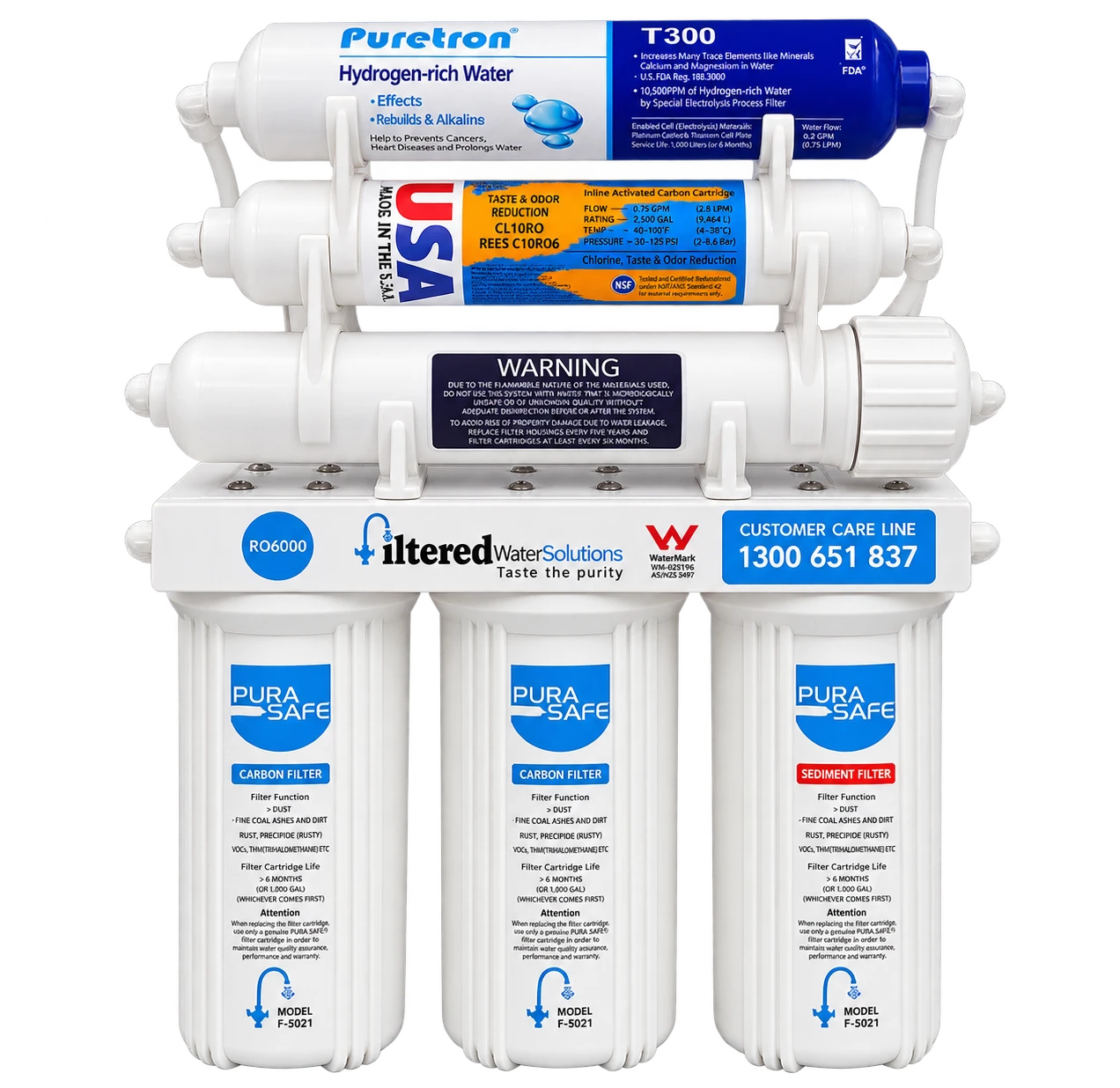
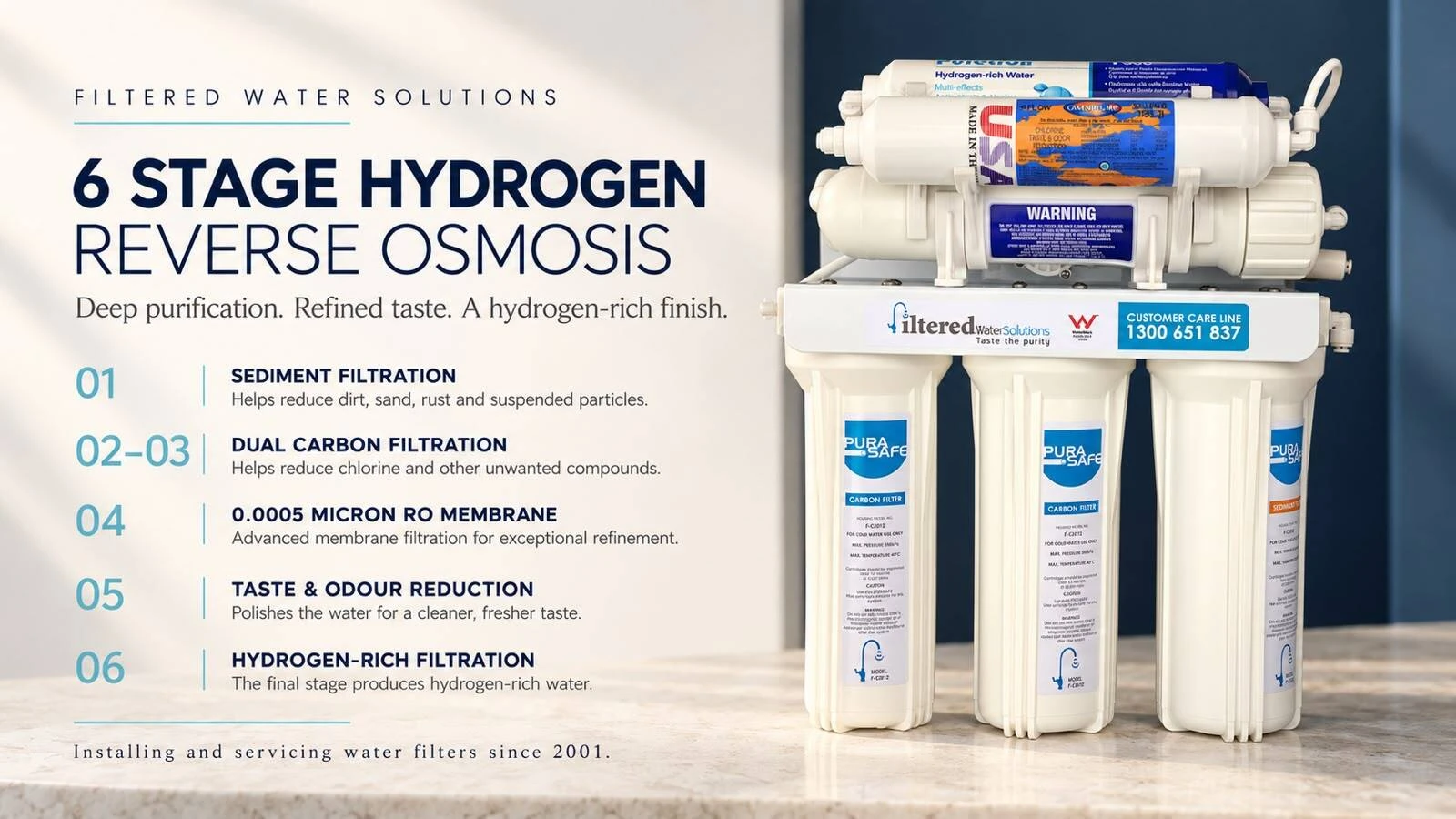
Sediment and carbon filters prepare the water for the reverse osmosis membrane, which reduces selected dissolved substances. A carbon filter polishes the taste before water passes through the final hydrogen cartridge.
What our 6 Stage Hydrogen RO System helps reduce
Sediment
Dirt
Rust
Unwanted tastes
Unwanted odours
Chlorine & Chloramines
Fluoride
Disinfection Byproducts (THMs & HAAs)
Lead
Copper
Rust, Iron & Manganese
Chromium-6 & Nickel
PFOS, PFOA & PFHxS
Calcium & Magnesium
Sodium & Chloride
Nitrates & Nitrites
Pesticides & Herbicides
Algal Toxins
Microplastics
Cysts & Parasites
Filtration at a glance
6 Stage RO: filtration at a glance
Sediment and carbon stages prepare the water for reverse osmosis, followed by taste polishing and a final hydrogen cartridge.
Taste and freshness
Unwanted tastes
Unwanted odours
Sediment and fine particles
Sediment
Dirt and rust
Carbon pre-filtration
Chlorine reduction
Preparation before the membrane
RO membrane filtration
RO membrane filtration
Selected dissolved substances
Finishing filtration
Carbon taste polishing
Hydrogen finishing cartridge
What Our RO Filtration System Targets
Chlorine
Chloramine
Earthy tastes & odours
Parasites
Cysts
Cryptosporidium
Giardia
Volatile Organic Compounds (VOCs)
Pesticides
Herbicides
Disinfectant by-products
Trihalomethanes (THMs)
Petrochemical residues
Fine particles
Sediment
Rust
Dirt
Sand
Mud
Algae & micro debris
Dust
Clay particles
Debris
Silt
Pipe scale
Heavy metals: lead & copper
Iron flakes
Larger microplastics
Chlorine taste
Unwanted odours
Unwanted tastes
PFAS PFOS Forever chemicals
Trihalomethanes
Organic chemicals
Industrial solvents
Petrochemical traces
Hydrocarbons
Prescription medications that survive the sewage treatment process
Large microplastic fragments and fibres
Disinfection By-Products (DBPs)
Sediments
Rust Flakes
Clay grit
Fine Mud
Algae
Organic particles
Parasitic cysts
Insecticides
Geosmin and 2-Methylisoborneol (MIB), a source of earthy taste and odour
Non-toxic natural compounds released by blue-green algae
Stagnant plumbing tastes picked up by metal-plastic by water resting in domestic copper pipes
Residual chemical odours
Industrial Solvents & Plastics
Agricultural Chemicals
6 Stage Hydrogen Reverse Osmosis
Ultimate Purity: What Your Under-Sink Reverse Osmosis System Is Designed to Reduce
Six stages combine sediment filtration, carbon pre-treatment, reverse osmosis and a carbon polish before the hydrogen finishing cartridge. Here’s a closer look at the water concerns each part of the system can address.
Harsh Chemicals & Disinfectants
✓
Chlorine & ChloraminesDisinfectants that can affect tap water’s smell and taste. Carbon pre-treatment helps reduce chlorine; chloramine reduction depends on the supplied media.
✓
FluorideA dissolved substance added to many Australian drinking-water supplies. Reverse osmosis can reduce fluoride ions.
✓
Disinfection Byproducts (THMs & HAAs)Compounds that can form when disinfectants react with natural organic matter. Reduction depends on the particular compound and filter media.
Heavy Metals & Pipe Contaminants
✓
LeadMay enter drinking water from some older plumbing, soldered joints and fittings.
✓
CopperCan dissolve from copper plumbing and contribute a metallic taste or blue-green staining.
✓
Rust, Iron & ManganeseCan contribute particles, metallic tastes or discolouration. Sediment filtration catches particles; dissolved forms require appropriate treatment.
✓
Chromium-6 & NickelDissolved metals that may occur in some water sources or leach from certain fittings.
“Forever Chemicals” (PFAS)
✓
PFOS, PFOA & PFHxSPersistent synthetic chemicals associated with sources such as industrial activity and legacy firefighting foams. RO can reduce PFAS; results vary by compound and system.
Hard Water Minerals & Salts
✓
Calcium & MagnesiumMinerals associated with hard water and scale in kettles and coffee machines. RO can lower their concentration before the final treatment stage.
✓
Sodium & ChlorideDissolved salts that may be present in source water. The RO membrane separates many dissolved salts from the filtered-water stream.
Agricultural & Environmental Runoff
✓
Nitrates & NitritesCan enter waterways through fertiliser runoff and septic seepage.
✓
Pesticides & HerbicidesResidues such as glyphosate and atrazine can reach waterways through runoff. Each substance requires its own verified reduction claim.
✓
Algal ToxinsCertain blue-green algal blooms can produce cyanotoxins. Treatment suitability depends on the specific toxin and complete system.
Microplastics & Biological Micro-Particles
✓
MicroplasticsSmall plastic fragments and synthetic fibres. Reduction depends on particle size, membrane integrity and the complete system.
✓
Cysts & ParasitesOrganisms such as Cryptosporidium and Giardia can resist chlorine.
The finishing stage
Hydrogen enrichment. A considered finish.
After membrane filtration and carbon taste polishing, water passes through the final hydrogen cartridge on its way to your dedicated tap.
Dissolved molecular hydrogen, H2
Molecular Hydrogen Infusion: Acting as a built-in hydrogen water filter, the final cartridge infuses your purified water with dissolved molecular hydrogen. Hydrogen-rich water is widely sought after by wellness enthusiasts and athletes for antioxidant support, reduced oxidative stress, and clean everyday hydration.
Minerals & alkaline balance
Dual-Action Hydrogen & Alkaline Remineralisation Filter Our all-in-one hydrogen water filter goes beyond standard purification by infusing your clean RO water with dissolved molecular hydrogen while naturally alkalising and remineralising every drop. While reverse osmosis strips away impurities, this dual-purpose cartridge restores essential electrolytes like calcium and magnesium to raise the pH for smooth, great-tasting alkaline water, while delivering antioxidant-rich molecular hydrogen straight from your tap to support daily hydration and wellness.
Six-stage under-sink reverse osmosis filtration with a hydrogen finishing stage and a dedicated drinking-water tap.
Tap a question below for a quick answer.
What does this system do?
It combines pre-filtration, a reverse osmosis membrane and finishing stages to treat your drinking water. Ask our team for the performance data for the supplied model and your local water conditions.
How do the six stages work?
Stage 1 filters sediment. Stages 2 and 3 use carbon filtration, followed by the reverse osmosis membrane at stage 4. Stage 5 polishes taste and odour, and stage 6 provides the hydrogen-rich finish shown in the graphic.
Where is it installed?
The system sits under the kitchen sink and supplies a dedicated drinking-water tap. We check cupboard space, plumbing and installation requirements before confirming the setup.
How is it different from the 5-stage system?
The 5-stage option features alkaline remineralisation; the 6-stage option shown here features taste and odour polishing and a hydrogen finishing stage. Compare the 5-stage alkaline system or ask us which suits your needs.
When do the filters need replacing?
Replacement intervals depend on the cartridge, water quality and household use. Follow the schedule supplied with your system. Contact servicing for replacement filters or maintenance.
How do I get a quote?
Tell us your suburb, household needs and available under-sink space. We will confirm the suitable model, installation inclusions and current price.